
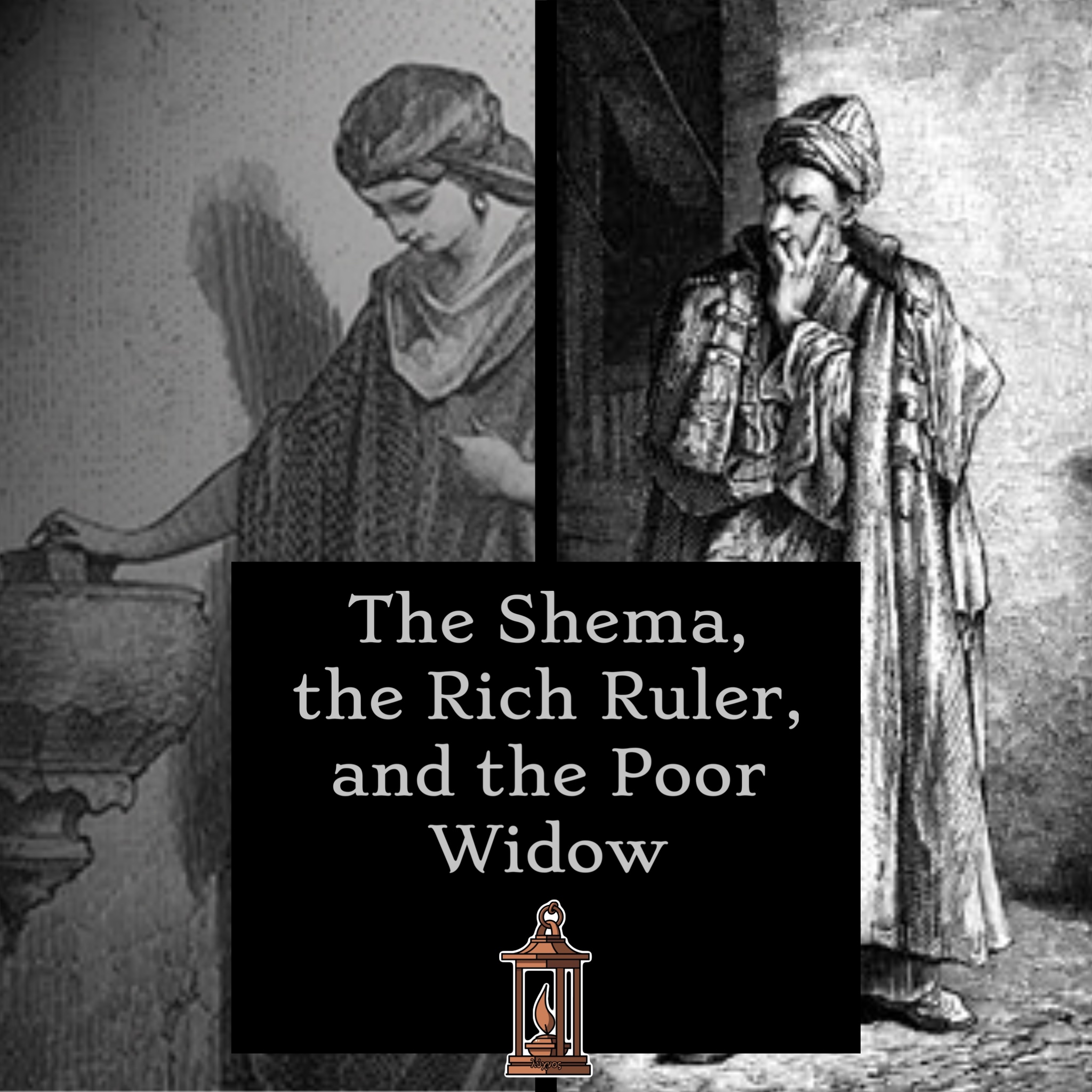
Finances are a tricky subject, especially for those who are asking, expecting, or needing them to function within God’s calling for their lives. Believers often struggle with the idea of tithing and such, especially since modern-day tithing (i.e., via cash and such) and the original ideas of tithing in the OT are significantly different practices.[1] Additionally, the widespread wildfire of prosperity teachers and preachers with private jets certainly doesn’t foster a positive attitude towards giving to the church. And understandably so. But tithing is still an act of faith, or better an act of trust to God, and “money makes the world go round,” so we inevitably need to be “giving” (to avoid the word “tithe”) for ministries, outreach programs, and other charitable acts to be done. There exists the idea in Judaism that while the Hebrew wordצֶדֶק (tzedeq) can be understood as “righteousness” or “justice”, צְדָקָה (tzedaqah) is used, even if conceptually, to be “charity.” Most Jewish kids grow up with a “tzedakah box” they frequently put money in for the sake of charitable deeds, and I turn and see my children’s own as writing this! Essentially, at least in Judaism, to “do” righteousness is to “do” charity. We’ll touch on this below.
Charity in the Scriptures.
Indeed, the bible is full of references to the goodness and importance of charity—so much so that it is superfluous to cite them! Proverbs 19:17, for instance, claims that someone who gives to the poor lends to the Lord Himself (מַלְוֵה יְהוָה; mal’weh יהוה) and Jesus, in Matthew 25, through the parable of the King (unassailably applied to Himself), says that “just as you did for one of the least of these brothers of mine, you did for me” (ἐφ᾿ ὅσον ἐποιήσατε ἑνὶ τούτων τῶν ἀδελφῶν μου τῶν ἐλαχίστων, ἐμοὶ ἐποιήσατε, v. 40). It is interesting that the giving of wealth is seen as giving directly to both the Father and to the Son, or that Jesus at least takes the position of the act being either directed to Him, passively or not, or the reward being given to those as if they had given to Him (which is a pregnant theme indeed for Christology!). But part of Jesus’ mission for the disciples in particular was not to worry about food (Matt. 6:25-26) and to forsake ensuring they had it, relying instead on God’s provision (Luke 9:3) which Paul would echo, too, that He richly provides in Christ (Phil. 4:19; cf. 2 Cor. 9:8; 1 Tim. 6:17-18). One’s heart, essentially, must be fully fixed on God and on God alone. Indeed: one can only serve one master, and the choice is between God or mammon (Matt. 6:24).
Paul will largely echo these sentiments at large. Not only does he confess both his and the apostles’ desire for him to remember the poor (Gal. 2:10) but he leads a massive giving campaign (the “collection”) throughout his Gentile churches for the sake of the poor in Jerusalem (1 Cor. 16:1-4; 2 Cor. 8:1-9:15; Rom. 15:14-32), something David J. Downs has recently demonstrated to have significant cultic connotations as likened unto temple offerings, aptly fit within the OT context of Israel giving tithes.[2] He commends generous giving (Rom. 12:8) and states that God loves a cheerful giver (2 Cor. 9:7), even providing overflow for people to give even more (2 Cor. 9:11). Calling the Corinthians to excel in everything (faith, speech, knowledge, love) that they do, he calls them, too, to excel in the grace of giving (ἵνα καὶ ἐν ταύτῃ τῇ χάριτι περισσεύητε, 2 Cor. 8:7) which is a privilege of service (8:4). Moreover, the apostle provides several defenses of ministers receiving funding for the sake of the Gospel: in quoting Deut. 25:4 of not muzzling an ox that is treading out grain (i.e., working) Paul draws out such a principle for application to ministers in both 1 Corinthians 9 and later, to his fellow minister Timothy, in 1 Timothy 5. There in Timothy Paul also seems to allude to and borrow Jesus’ own words “The laborer deserves his wages” (1 Tim. 5:18), likely from the Lord’s words in Matt. 10:10 // Luke 10:7. Paul’s reference, however, may simply be Leviticus 19:13—a reference likely shared by James as well (Jas. 5:4). Regardless of the origin, Paul’s point is clear: a minister, like an ox, ought to be compensated for the sake of survival as they “tread out” the “field” of humans, who are likened unto a harvest frequently (e.g. Matt. 9:35-38; Luke 10:2).
In a practical sense this is rather obvious: how can we really do anything without people giving? While there is significant financial abuse of charitable giving—both in the secular and religious areas, and both at the smaller (i.e., the small-church pastor not handling his finances well) and greater (whole ministries not handling the finances properly) levels—and there is indeed warrant to focus on ways to solve these problems, the fact remains that if believers don’t give, nothing is going to get done. Sure, God can make money appear on a tree or out of a cloud, but does He do that? No. As typical, He prefers (and chooses) to work through people. And we have all been, most likely, both the givers and receivers of brotherly and sisterly charity in the Church.
But this isn’t really the point of this article, essay, or whatever this is. The need for giving is not just corporate, in contributing to the evangelistic and ministering efforts of the Church, nor is it individualistic, in giving to the poor who will always be in our midst (Matt. 26:11; cf. Deut. 15:11). But it is a matter of faith, and thus, obedience. Finances expose—or, how we spend and handle our finances—to us who we are. As my old rabbi Greg Hershberg has frequently said, “Show me your bank account and I’ll show you where your heart is” (pretty faithful paraphrase). And indeed: Paul tells us that the love of money is the root of much evil (1 Tim. 6:10), seemingly echoing Jesus’ call to serve one master, as you cannot serve two. This isn’t, either, a writing to call us to more charitable deeds or to install biblical-principles-based programs for managing our finances (though, if access to the Holy Spirit is lacking, this might be smart; actually, both are really good period) but to show a seldom-recognized (I have not researched if people pick up on it frequently) detail which connects the Shema and Mark’s presentation of Jesus’ interactions with the young rich ruler and the poor widow.
The Rich Ruler and the Poor Widow: Two Parallel Opposites
In the gospels we read of two particular accounts where money comes into focus, and in two very different ways which elucidate our points above. The first is in Mark 10:17-22, which really extends until v. 31, where we read of the account of the young rich ruler. In the account, this man came before Him, kneeling, and asked, “what must I do to inherit eternal life?” (v. 17). Jesus’ response is surprising—at least to modern sensitivities:
You know the commands: “Do not murder”, “Do not commit adultery”, “Do not steal”, “Do not bear false witness”, “Do not defraud”, “Honor your father and mother” (v. 19).
Here Jesus seems to, well, say that inheriting eternal life is, at least in part, based on this man’s keeping of these commandments—specifically, the Decalogue. But we needn’t go down this rabbit hole. The man’s response is almost just as surprising:
And he said to Him, “Rabbi, all of these I have guarded from my youth” (v. 20).
There is no reason to believe the young man was prideful, self-elevated, or deceived into thinking he really had kept these all since he was a child. And Jesus does not correct him on this at all. While some commentators will suggest that this young man is demonstrating some undesirable characteristic in his confident response, there is nothing in the text to infer this, and that Jesus does not take up issue with it, neither should we. Mark records Jesus’ response with some beautiful significance instead: “And now Jesus looked upon him and, loving him, said to him” (ὁ δὲ ᾿Ιησοῦς ἐμβλέψας αὐτῷ ἠγάπησεν αὐτὸν καὶ εἶπεν αὐτῷ):
You but lack one thing: go, sell whatever you have and give it to the poor, and you will have treasure in heaven—and come, follow Me (v. 21).
The man became gloomy (στυγνάσας; cf. Matt. 16:3) at the saying and went off sorrowfully, “for he had many possessions” (ἦν γὰρ ἔχων κτήματα πολλά, v. 22). Jesus then goes on to say how hard it is for a rich person to enter the kingdom (vv. 23-25), astonishing the disciples (vv. 26-27). In Matthew’s (clearer) account Peter states that he, and the apostles, have left everything behind to follow Him and asks, “What then will we have?” (19:27) to which Jesus responds they will sit on twelve thrones judging the twelve tribes—the apostles, that is, not us (!)—and that who has left all these other things will receive a hundredfold and inherit eternal life (19:28-29). One can almost picture Jesus, having loved this young man, watching him walk away from what could have been, and the shame the man carried with him—certainly a zealous and pious man, one who even kneeled before this rabbi—as he walked away, knowing he was chained down by his material goods.
This young rich ruler is a heuristic occurrence for numerous elements which face the believer from antiquity to now: do we love what we have, or are we committed to God alone? Moreover, and more significant, is this: it is not necessarily the giving away everything you own to the poor that is the “one thing lacking”, but it is the following Jesus. One could even argue that the giving all to the poor is really just the preparatory act for following Jesus. Faced at this crossroads—this fork in the road—Jesus looks lovingly upon this man and says: “Go” (ὕπαγε), rid yourself of all that holds you back in life and occupies your devotion, and “Come Back” (δεῦρο) to Me, so that you may follow Me. What is lacking is not the giving away all that is, but it is Jesus: it is following Him that is lacking. Lori A. Baron argues that this is the same idea that can be found two chapters later, where in Mark 12 Jesus is asked about the greatest command, answers with the Shema and Lev. 19:18, and tells the scribe—who responds well—that He is “not far from the kingdom of God” (12:34). Baron suggests that
The passage that follows addresses what seems to be keeping the scribe at arm’s length from the kingdom: Jesus teaches about the identity of the Son of David, citing Ps 110:1…By following the Shema with Ps 110, Mark hints that the one thing the scribe lacks is the understanding that Jesus is the κύριος [“lord”] whose divine sonship will result in enthronement at the right hand of God.[3]
Some may disagree with Baron’s assumption that 12:35-37 follows, intentionally or chronologically, the question with the scribes, and thus that we are to make anything significant of this. However, that 12:38-40 picks up with a rebuke of the scribes’ conduct and practices may be suggestive of this all being one account. Moreover, 12:35 reads καὶ ἀποκριθεὶς ὁ ᾿Ιησοῦς ἔλεγε[ν] διδάσκων ἐν τῷ ἱερῷ, which we ought to translate as continuing within the present setting: “and Jesus went on and answered, saying as he taught in the temple.” This translation may feel jagged and inaccurate, but I choose it for several reasons. First, as I have argued elsewhere,[4] Mark employs particular uses of his λέγω- verbs, particularly ἔλεγεν in continuing, yet shifting, discourse. Second, we must keep in mind that no locational shift has occurred, and thus the verse needs translated with some nuance that accommodates the fixed setting. As France writes, “The location of the dialogues was fixed by the mention in 11:27 that it was as he was walking in the temple that the members of the Sanhedrin approached Jesus with their challenge to his authority.” The shift has just gone from “walking” to “teaching” in v. 35. “Since then no change of scene has been indicated…we are reminded…that Jesus is teaching [in the temple] where he will remain (as 12:41 will confirm) until he makes his dramatic exit in 13:1.”[5]
Third, and more important, we have here the verb ἀποκριθεὶς. Wallace contends ἀποκρίνομαι is a “true deponent”,[6] a verb with active meaning, without form, but found in the middle (or passive) voice. Decker notes, however, that ἀποκριθεὶς—which he argues the basis of an intransitive “θη middle” form—“also occurs in the active voice in both classical and Koine literature”,[7] rightly moving us to depart from placing ἀποκριθεὶς under the lexical entry of ἀποκρίνομαι and, such as Danker, under ἀποκρίνω. In BDAG, Danker lists Mark 12:35 under category (2) of the entry for ἀποκρίνομαι: “Of the continuation of discourse”.[8] But Decker’s comments are worth citing here:
The idiomatic expression, ἀποκριθείς plus a form of λέγω, has become an “empty formula” (Zerwick, 127 §366; cf. BDAG, 114.2) in Hellenistic Greek such that often no question is stated or implied in the context. More recently Danker (CL, 47) has argued that “the Greek is not so bland [i.e., as a redundancy] . . ., therefore some such rendering as said in reaction/rejoinder may do more justice to the diction and syntax.” Certainly it is not always in reply to a specific question (though it may be, e.g., 12:29) and may be in response to a statement (as opposed to a question; e.g., 3:33; 7:28) or to an event (e.g., 9:5). The construction is well-attested in the LXX, occurring most frequently in Genesis.[9]
Here we have an abrupt shift with ἀποκριθείς plus a likely discourse-continuing ἔλεγεν, leading us to see that Jesus is continuing—in some capacity—in the fixed situation. Commenting on 12:35 Decker writes, with Gundry:
“Since Jesus has already answered the scribe in verse 34ab and since Mark’s statement that ‘nobody was daring to question him any more’ has intervened in v 34c, Jesus’ ‘answering’ does not mean that he answers the scribe, but that he responds to the lack of further questions by asking his own questions about the scribes” (Gundry, 717). Mark does not specify to whom the question was addressed. The question functions as a rhetorical device to introduce the subject of Jesus’ teaching. The || Luke 20:41 has the question addressed to “them” (εἶπεν δὲ πρὸς αὐτούς), but without specification as to the referent. In Matt 22:41, a similar question is addressed to the Pharisees. Given the location of the statement of Mark 12:34 || Matt 22:46—following the question in Matthew, but preceding it in Mark—it is possible that Jesus addressed a question first to the Pharisees, then, having silenced them, used their response (Matt 22:42, λέγουσιν αὐτῷ· τοῦ Δαυίδ) as a rhetorical question addressed to the crowd (Mark 12:35).[10]
If the views above are accepted, we can uphold Baron’s suggestion of connectivity here, even if for Mark’s structural, narrative, and thematic intentions. This being the case, we are at sufficient liberty to connect 12:41-44 to the same fixed scenario as well. A link is present in v. 40 where widows are mentioned, of the scribes “who devour widows’ houses and for a show make long prayers”, which suggests the mention of the “poor widow” (χήρα πτωχὴ) in v. 42 is intentional and integral to the narrative, and thus, we may suggest, to Jesus’ intramural point(s). Further evidence for a fixed scenario or location is found in v. 41, where we read “And Jesus sat down across from the treasury, watching how the people cast money into the treasury” (καὶ καθίσας ὁ ᾿Ιησοῦς κατέναντι τοῦ γαζοφυλακίου ἐθεώρει πῶς ὁ ὄχλος βάλλει χαλκὸν εἰς τὸ γαζοφυλάκιον). Here γαζοφυλακίον is used twice to seemingly refer to both the treasury and the chest itself. As Alfred Edersheim argued long ago, it is likely the collection chests outside of the Court of the Women where these donations would have occurred and the words’ referent. He describes the setting,
All around [the Court of the Women] ran a simple colonnade, and within it, against the wall, the thirteen chests, or ‘trumpets,’ for charitable contributions were placed. These thirteen chests were narrow at the mouth and wide at the bottom, shaped like trumpets, whence their name. Their specific objects were carefully marked on them. Nine were for the receipt of what was legally due by worshippers; the other four for strictly voluntary gifts.[11]
This would certainly place Jesus as still in the same vicinity but serendipitously link the events and discourses to one another for intentional meaning. Upon seeing this widow put in “two small copper coins (which is, a quadran)”[12] in v. 42, Jesus calls the disciples over in v. 43 and says that she had given more than everyone else. He explains (γὰρ) that though these others have given out of their abundance (περισσεύοντος), this lady had given out of her want (ὑστερήσεως)—all that she had, even all that she had to live on (πάντα ὅσα εἶχεν ἔβαλεν, ὅλον τὸν βίον αὐτῆς, v. 44). Sweet old bubbe’s memory is forever enshrined in the Scriptures because she gave all that she had to God, and Jesus ensured this would be so (something He does from time to time; cf. Matt. 26:13).[13] In 13:1 we have the definitive departure time of Jesus leaving the temple, tying together the content of chapters 11 and 12 being one event. But what do we do with the watching of the widow, and are we to make no significance of this? If so, it seems rather random.
I would argue that it is not random or careless, but intentional on many levels. While we will discuss implications below, the demonstrated faithfulness of this “poor widow” presents her as rather rich in God’s Eyes, and her example is certainly—amongst rich people, hypocritical religious leaders, and an economically complicated temple[14]—meant to say something more than just being charitable, yes? On the surface, however, the profundity is palpable: compared to the young rich man who, though seemingly acknowledging Jesus as something, at the least a respectable rabbi, would not give up his many possessions to follow Him, we have this poor widow who not only gave everything she had, but for a donation that would quite literally fall in between the cracks of other, significant donations. She is, here, presented as one totally committed to God. And while we cannot see in her mind, and the narrative does not indulge our curiosities, we can only imagine the pious commitment to God: she, truly, was one who loved God with all of her heart, all of her soul, and all of her mind—something Jesus had just told the scribe in 12:28-33 is the most important command, quoting the Shema and Lev. 19:18. There is a tinge of facetiousness here narratologically[15] as the scribe responds that loving God with all of one’s being (the Shema) and loving neighbor (Leviticus) are much more than burnt offerings and sacrifices (v. 33), and here this poor widow does not even give “whole burnt offerings” (ὁλοκαυτωμάτων) but, essentially, two shaved half-pennies and is applauded as having given more than all the others! Juxtaposed to the self-ascribed pious scribes Jesus positions this poor widow as illustrating true righteousness before God, and providing the worthiest of sacrifice to Him. But why?
The Shema and Tzedekah Interpretations.
The Shema stands as the most famous of passages in the first testament, and understandably so: if one had to designate something as the “creed” of Judaism, it would be the Shema. Recited twice daily by modern Jews and beginning Moses’ final sermon recapitulating the Torah to Israel in Deuteronomy, the importance and significance cannot be overstated, nor can its complexities (which we won’t get into, nor will I explain my translation choices here):
Hear, Israel: יחוה our God [יהוה] is One. And you shall love יהוה your God with all of your heart, and with all of your soul, and with all of your will. And these words, which I am commanding you today, shall be on your heart. And you shall impress them upon your children, and shall talk of them when you are in your home and when you walk by the way; when you lie down, and when you rise up. And you shall bind them as a sign on your hand, and they shall serve as symbols on your forehead. And you shall write them on the doorposts of your houses and gates.
שְׁמַע יִשְׂרָאֵל יְהוָה אֱלֹהֵינוּ יְהוָה אֶחָֽד
וְאָ֣הַבְתָּ֔ אֵ֖ת יְהוָ֣ה אֱלֹהֶ֑יךָ בְּכָל־לְבָבְךָ֥ וּבְכָל־נַפְשְׁךָ֖ וּבְכָל־מְאֹדֶֽך
וְהָי֞וּ הַדְּבָרִ֣ים הָאֵ֗לֶּה אֲשֶׁ֨ר אָנֹכִ֧י מְצַוְּךָ֛ הַיּ֖וֹם עַל־לְבָבֶֽךָ
וְשִׁנַּנְתָּ֣ם לְבָנֶ֔יךָ וְדִבַּרְתָּ֖ בָּ֑ם בְּשִׁבְתְּךָ֤ בְּבֵיתֶ֙ךָ֙ וּבְלֶכְתְּךָ֣ בַדֶּ֔רֶךְ וּֽבְשָׁכְבְּךָ֖ וּבְקוּמֶֽךָ
וּקְשַׁרְתָּ֥ם לְא֖וֹת עַל־יָדֶ֑ךָ וְהָי֥וּ לְטֹטָפֹ֖ת בֵּ֥ין עֵינֶֽיךָ
וּכְתַבְתָּ֛ם עַל־מְזוּזֹ֥ת בֵּיתֶ֖ךָ וּבִשְׁעָרֶֽיךָDeuteronomy 6:5-9
Baron provides a fascinating study into the use of the Shema in John, but her overview of the use of the Shema implicitly and explicitly throughout the Hebrew Bible, Second Temple Period sources, and Josephus and Philo are worth the purchase of her work, and it is to her that I credit the writing of this essay-article (the motivation for it arose reading her book, which I have reviewed here). For Baron, the Shema “forms the centerpiece of Mosaic legislation and summarizes the covenantal obligation of the Israelite toward YHWH”,[16] and is used in other Jewish literature “evoked as a cipher for covenantal faithfulness”.[17] Such an idea is quite obvious to any reader or researcher, as the Shema stands somewhat as the “creed” of Judaism, and its use by Jesus only affirms its centrality and fundamental importance. Baron’s study, however, focuses largely on the influence the Shema had, and particularly within the borrowed and adapted vocabulary reminiscent of it. For her, language such as “loving God with all of your heart, soul, and might”, and similar expressions, draws at least in part from the Shema, and forms the religious heritage developing this literary phraseology in Jewish literature. We cannot spend what her study deserves in time here, and my focus is on one particular aspect of the Shema.
Commenting on the importance of love—one of the Shema-nic motifs Baron sees characterizing later echoes—central here, she writes that “love is not primarily understood as an emotion, but an expression of absolute loyalty and obedience to the king; love could be commanded”,[18] seeing there being ANE political treaties influence here. She brings up rabbis’ views, however, which are of our particular interest:
In m. Ber. 9:5, the rabbis expound upon the meaning of each phrase of Deut 6:5; “With all thy heart—with both thine impulses, thy good impulse and thine evil impulse; and with all thy soul—even if he take away thy soul; and with all thy might—with all thy wealth.[19]
Set against the landscape of the Shema being used to describe one committing themselves entirely to God and the immediate correspondence with Leviticus 19:18, of loving neighbor, and particularly the correspondence between the Decalogue and the Shema throughout HB and Jewish literature, can we draw a line of influence between first century and later rabbinic ideas of the Shema? Can we, essentially, see there being some programmatic and significant use here with the poor widow, her giving all she had to God, and all set against a rebuke of widow-abuse and a polemical use of the Shema with the scribe? In other words, can the widow exhibiting a true piety towards and keeping of the Shema be used as a rebuke to the religious leaders Jesus is going back and forth with in the temple? For Baron, we can at least see that for the young rich ruler (to whom the Decalogue is affixed) and the widow (to whom the Shema is affixed),
When the young man replies that he already keeps the commandments, Jesus tells him to give away all of his wealth and follow him. Jesus divines the one thing that the young man lacks: he is not able to love God completely, with all of his wealth, and he walks away grieving. Jesus’s demand coheres with a rabbinic interpretation of the Shema in which loving God [with all your strength/might]…means with all of one’s possessions. The widow…stands out as a positive example of someone who does, in fact, love God with all of her possessions[20]
With Baron I would contend that Mark’s placement here is no accident, and we are to draw from these juxtaposed characters in the gospel as demonstrating the two polar opposites of true and committed love to God expressed in not only the Shema, but the Decalogue as well. Here the young rich ruler is demonstrated to not fully love God, being attached to his material possessions which hinder him from being fully committed to God. In a way, these are his idols: these are what are set before God, and prevent him from truly entering this second exodus with Jesus. The narrative then moves to the temple, Jesus overthrows the money changing tables, and is confronted by scribes on an assortment of topics—but mainly Christological-related. Mark’s intentional narrative, I believe, develops these two figures as central to the message of discipleship and true servitude towards God. The rich ruler could and would not sacrifice and give his “very-ness” (מְאֹדֶֽךָ; me’o’deka) to Jesus the King.
Paralleled to the scribe’s response to Jesus in Mark 12:33, there is a tinge of irony here. The scribe, responding to Jesus that He has answered correctly, seems to unnecessarily add that loving God and others “is much more than all whole burnt offerings and sacrifices” (πλείὸν ἐστι πάντων τῶν ὁλοκαυτωμάτων καὶ τῶν θυσιῶν). What comes to mind—my mind, at least—is what we read in Avot DeRabbi Natan 4:5:
Once, Rabban Yochanan ben Zakkai was walking with his disciples, Rabbi Y’hoshuah, near Jerusalem after the destruction of the Temple. R. Y’hoshua looked at the Temple ruins and said, “Oy for us! The place that atoned for the sins of the people Israel – through animal sacrifice – lies in ruins!” Rabbi Yohanan ben Zakkai spoke to him in comfort, “Do not be too sad, my son. We have another equally meritorious way of gaining atonement – deeds of lovingkindness.” For it is written, “Lovingkindness I desire, not sacrifice” (Hosea 6:6).[21]
The otherwise superfluous or unwarranted addition by the scribe is likely not so: at the very least in Mark’s narrative program, a potential proto-rabbinic idea of lovingkindness being comparable, at least in ideal, to the Temple sacrifices may loom in the background. Similar ideas of comparing the temple sacrifices’ efficacy to prayer, for example, are found in rabbinic literature (e.g., Berakhot 32b), and I would argue that Mark is here involved with a matrix of “weightier matters” concepts underlying charity and sacrificing one’s goods to God as delineating two extremes by way of the rich ruler and the poor widow. We could even see some potential meaning being hidden in that the woman’s “deeds” (as compared to the rich ruler guarding all of the commandments from his youth) go unmentioned contra the man, focusing strictly on the core of her commitment to God rather than what can simply be “good behavior”. In other words, we are looking at a woman wholly committed to serving God in the Shema, the complement to the intention of the Decalogue, and not “merely” (I obviously use this carefully) keeping commands. Jesus applauds this reality the young man confesses—it may even be partially why Jesus looks so lovingly upon him—but He adds “If you will be perfect…follow Me.” It is not just our keeping of the commandments—our obedience unto God, and even the Decalogue itself—that is what God wants, but a heart that is fully and wholly committed to Him, unwaveringly dedicated regardless of what we have—all of which are, more or less and most of the time, blessings from Him indeed. These two characters, in my mind, aptly reveal the ideas of charity embedded into the Shema and drawn out by later interpreters. We may appeal to Baron again in her estimation of the same idea existing in James 1:9, where he continues to go on discussing the rich and their inevitable plight of riches if not committed to God, and connects it to a single-minded approach to God intrinsic in the Shema and extended properly to charity:
The double-minded or “double-hearted” person is the antithesis of the one who loves God with all of his heart and with all of his soul (Deut 6:5): the desire for worldly wealth and pleasures sabotages the ability to devote one’s whole self to God (cf. Matt 5:3; 6:24).
The δίψυχος therefore fails to love God with all of his or her strength…While the δίψυχος fails to live up to the demands of the Shema, the poor embody it: they are rich in faith, heirs of the kingdom; they are “those who love God” (2:5). The proximity of δίψυχος (James 1:8) to the mention of those who love God (1:12) increases the volume of the echo of the Shema in this section. It is also significant that the word δίψυχος (δίς + ψυχή), lit. “double-souled,” reflects the second term in Deut 6:5 LXX, ψυχή; the Israelite was to live God with an undivided ψυχή as well as a whole heart.[22]
Loving God with All of Our Being
The depth and riches before us can be entreated in a significantly longer format, but the intent of this essay/article/thing was just to briefly draw out the beauty we find embedded in the gospels’ account of the young rich ruler and the old poor widow, drawing from the same embedded into the Shema, Decalogue, and echoes of both throughout Jewish literature. I hope, and do believe, that this is another drop in the bucket of understanding the importance of committing our whole selves to God (cf. Rom. 12:1) and that our self-sacrifice to God naturally encompasses all of our being(s), even that which we guard and treasure the most: our riches. The most threatening thing to Christian discipleship is this: comfort. Whether it be avoiding serving God for the sake of comfort, idolizing the comforts we have, or striving after the accumulation of more and more comforts (all of these are not very different!), comfort is the leaven of the loaf which is our life, posing an ever-present threat to presenting to God a pure, unleavened loaf of our whole beings.
The Shema beckons us to answer a call to undivided commitment to God in every aspect of our lives: to acknowledge that He alone is God, and that He is to be One to us, and also that we are to be one to Him. But this mental ascent or cognitive acceptance of this truth is not what He wants alone. No, He wants us to love Him with all of our beings, and since we are in a world that is fundamentally operative by way of finances, serving Him includes our finances, which is something we all likely struggle with. The poor widow rebukes us, as she gives all that she had to God in true worship. The rich ruler rebukes us, as he would not give up what he had in order to follow Jesus. And if he wouldn’t do that with God-in-the-Flesh in front of him, it is an even stronger rebuke to us who don’t have Him right before us. In Mark’s narrative, the poor widow serves as hope contra the rich ruler, as after Jesus moving from the Decalogue to the Shema, this woman exemplifies the significance which lays behind these things and the message that Jesus was likely getting at and that certainly applies to us. Woven into the narrative, the temple destruction and need for true charity mapped onto the tithing system is likely not without intention or purpose, either. But that would have to be for another day. What we can come away with from this is simply this: God calls us to serve Him with all of us, with all of our “very-ness”, and our finances is a wonderful area where we can be rebuked by our own course of life.
[1] For a good overview of not only the differences between the first testament’s tithing system and the giving in the second testament, but conceptualizing and contextualizing these together, see Lekgheto Moretsi, “Tithing: An Evaluation of the Biblical Background.” In die Skriflig 43.2 (2012): 397-412. See also Prince E. Peters, “Deontology of New Testament Tithing: An Analysis.” Theologia Viatorum 45.1 (2021): A102. Also and particularly, Andreas J. Kötsenberger and David A. Croteau, “‘Will a Man Rob God?’ (Malachi 3:8): A Study of Tithing in the Old and New Testaments.” BBR 16.1 (2006): 53-77. Of course, most any tertiary resource will have extensive background information on the various tithes and offerings in the OT.
[2] David J. Downs, The Offering of the Gentiles: Paul’s Collection for Jerusalem in Its Chronological, Cultural, and Cultic Contexts. WUNT II/248 (Tübingen: Mohr Siebeck, 2008); reprinted under the same title through Eerdmans, 2016.
[3] Lori A. Baron, The Shema in John’s Gospel. WUNT II/574 (Tübingen: Mohr Siebeck, 2022), 108.
[4] Purity, Politics, and Parables: A Narratological and Exegetical Study on the Handwashing Conflict in Mark 7:1-23 (Independent, 2025), 213-218.
[5] R. T. France, The Gospel of Mark: A Commentary on the Greek Text. NIGTC (Grand Rapids, MI: Eerdmans, 2002), 485.
[6] Daniel B. Wallace, Greek Grammar Beyond the Basics: An Exegetical Syntax of the New Testament (Grand Rapids, MI: Zondervan Academic, 1996), 430.
[7] Decker, Mark 1-8: A Handbook on the Greek Text. BHGNT (Waco, TX: Baylor University Press, 2014), 88.
[8] BDAG, 114.
[9] Decker, ibid.
[10] Rodney J. Decker, Mark 9-16: A Handbook on the Greek Text. BHGNT (Waco, TX: Baylor University Press, 2014), 134.
[11] Alfred Edersheim, The Temple: Its Ministry and Services. Updated Edition (Peabody, MA: Hendrickson Publishers, 1994), 25.
[12] The Greek reads λεπτὰ δύο, ὅ ἐστι κοδράντης. The λεπτόν would refer to a stripped or delayered coin called a “mite”, being very thin—very light, and thus not worth much. The κοδράντης, known as a “farthing”, was about the worth of a modern-day penny, hence why many translations choose this. The point is what this lady is giving is not even pennies.
[13] We don’t actually have any reason to believe she was old. It’s just what I picture.
[14] For the economical reasons behind the overthrowing of the tables in Mark 11, see the interesting and recent thoughts presented by Paul Sloan in chapter six of Jesus and the Law of Moses: The Gospels and the Restoration of Israel within First-Century Judaism (Gand Rapids, MI: Baker Academic, 2025).
[15] This is not a word, but it should be.
[16] Baron, The Shema, 15.
[17] Baron, The Shema, 31.
[18] Baron, The Shema, 22.
[19] Ibid.
[20] Baron, The Shema, 107-108.
[21] Translation of Avot DeRabbi Natan by David Kasher, Sefaria (2019).
[22] Baron, The Shema, 139.